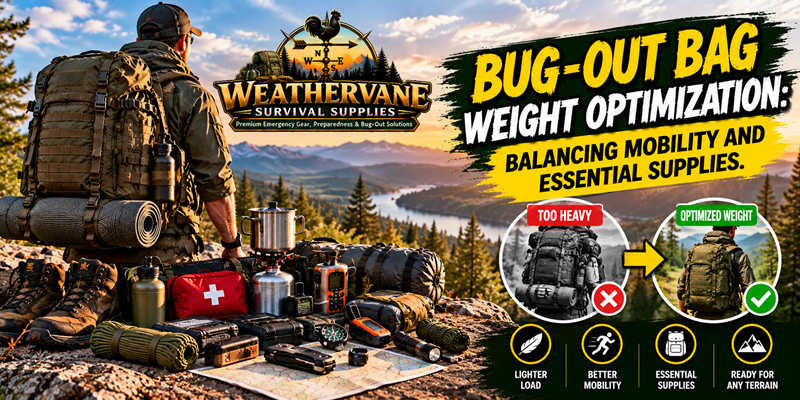
Bug-Out Bag Weight Optimization: Balancing Mobility and Essential Supplies – When preparing for emergency evacuations, many individuals make the mistake of overpacking their bug-out bags. The impulse to carry every possible survival tool often leads to an excessively heavy backpack that hampers speed, causes physical fatigue, and increases the risk of joint injuries. In real-world emergency scenarios, mobility and endurance are just as vital as the equipment you carry.
Bug-Out Bag Weight Optimization: Balancing Mobility and Essential Supplies
Achieving proper bug-out bag weight optimization requires striking a careful balance between mobility and necessity. By evaluating supply efficiency, selecting multi-purpose gear, and adhering to strict body-weight ratios, you can build a streamlined evacuation kit that protects your health while keeping you fast on your feet.
The Golden Rule of Carrying Capacity
Emergency response experts and military strategists generally agree on a baseline standard for load management: a fully loaded emergency backpack should not exceed twenty to twenty-five percent of your total body weight. For instance, an individual weighing 160 pounds should aim for a total pack weight between 32 and 40 pounds.
Exceeding this threshold significantly accelerates muscle fatigue, degrades walking posture, and causes early exhaustion during long-distance foot evacuations. Keeping your total pack weight manageable ensures that you retain the endurance necessary to navigate difficult terrain, climb over obstacles, or travel extended distances without stopping frequently.
Key Principles for Optimizing Bug-Out Bag Weight
Streamlining your emergency kit without sacrificing core survival capabilities involves applying strategic packing rules. Consider the following techniques to eliminate unnecessary bulk:
1. Prioritize Multi-Functional Gear
Every single item inside your pack must justify its presence. Choosing tools that perform multiple distinct functions allows you to eliminate redundant equipment instantly.
-
Poncho Tarps: Serves as wearable rain protection, a ground waterproof barrier, or a makeshift emergency shelter.
-
Stainless Steel Canteens: Functions as daily water storage and doubles as a metal vessel for boiling and purifying water over a fire.
-
Heavy-Duty Paracord: Replaces heavy straps and rope for rigging shelters, repairing gear, or securing loads.
2. Trade Heavy Gear for Knowledge
The most powerful survival tool weighs nothing. Developing practical field skills reduces your reliance on heavy physical equipment. For example, learning advanced knot-tying techniques eliminates the need for heavy plastic clamps or carabiners, while mastering friction fire methods reduces the weight of carrying excessive backup ignition devices.
3. Transition to Ultra-Lightweight Materials
Modern material technology has revolutionized survival gear manufacturing. Upgrading legacy military surplus items to modern lightweight outdoor equipment yields dramatic weight savings.
-
Titanium vs. Stainless Steel: Titanium cookware offers exceptional strength at nearly half the weight of traditional steel options.
-
Silnylon and Dyneema Tarps: Modern synthetic fabrics provide superior waterproof performance while compressing to a fraction of traditional canvas or rubberized shelters.
-
Mylar and Micro-Insulation: Compact thermal blankets and synthetic insulation layers replace heavy wool blankets.
Categorizing Equipment into Survival Priorities
To prevent overpacking, organize your gear list by strict survival priorities. Group your equipment into core necessities and non-essential comfort items:
-
Tier 1 (Non-Negotiable Core): Water filtration tools, compact shelter, basic first aid, prescription medicine, and navigation tools. These items must remain in your bag under all circumstances. Organizing Emergency Gear and Equipment Layouts for Quick Evacuation
-
Tier 2 (High Utility): High-calorie rations, compact lighting, multi-tools, and weather-appropriate clothing layers. Optimize these items for weight and volume.
-
Tier 3 (Optional or Comfort Items): Heavy camp chairs, excessive spare clothing, large fixed-blade axes, and complex cooking stoves. These items are prime candidates for removal during weight audits.
Conducting a Bi-Annual Gear Weight Audit
Gear optimization is an ongoing process rather than a one-time task. Conducting regular physical audits keeps your kit aligned with your current physical condition and seasonal weather shifts.
-
Weigh Every Item Individually: Use a digital kitchen scale to measure the exact weight of each item in grams or ounces. Record these numbers in a spreadsheet to identify unexpectedly heavy items.
-
Weigh the Total Loaded Pack: Step on a luggage scale with your fully packed bag, including full water containers and food supplies, to confirm it falls under your target body-weight percentage.
-
Perform a Test Hike: Walk three to five miles with your packed bag. Take note of shoulder friction, back discomfort, or items you did not use during the hike. Adjust your contents based on real field feedback.
Final Thoughts
Optimizing your bug-out bag weight is essential for maintaining agility and stamina during an emergency evacuation. A lighter bag reduces physical strain, prevents early exhaustion, and allows you to react swiftly to unexpected hazards. Focus on multi-purpose tools, leverage practical survival skills, and conduct regular weight audits to ensure your kit provides maximum protection at a fraction of the weight.