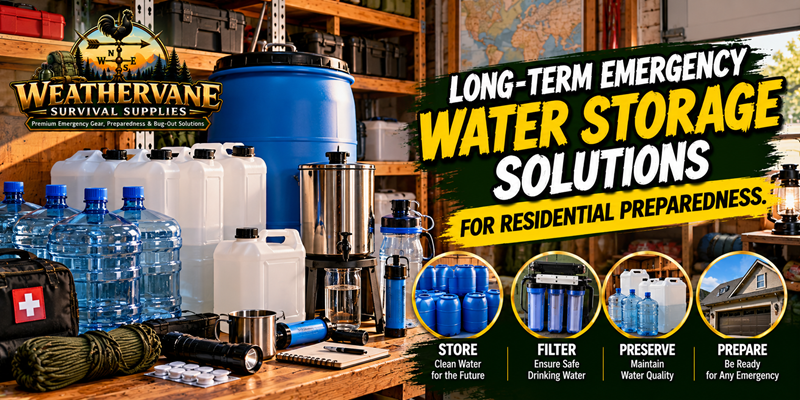
Long-Term Emergency Water Storage Solutions for Residential Preparedness – Access to clean drinking water is the single most critical factor in household survival. During natural disasters, municipal infrastructure failures, or widespread environmental contamination, public water utility systems can instantly shut down or become unsafe to drink. While many homeowners store canned food or emergency batteries, water storage is frequently overlooked or implemented incorrectly.
Long-Term Emergency Water Storage Solutions for Residential Preparedness
Establishing a long-term emergency water storage system at home ensures your family remains healthy, hydrated, and self-sufficient during prolonged crises. Understanding proper container selection, treatment methodologies, and storage environments allows you to build a reliable water reserve that lasts for years.
Calculating Household Water Requirements
Before purchasing storage containers, you must accurately calculate your household’s daily consumption needs. Emergency management agencies recommend a baseline minimum of one gallon of water per person per day.
-
Drinking Needs: Roughly half a gallon goes toward direct hydration per individual.
-
Sanitation and Hygiene: The remaining half gallon accounts for food preparation, dishwashing, and basic personal hygiene.
-
Special Considerations: Households with pets, nursing mothers, or family members living in hot climates should increase this calculation to 1.5 or 2 gallons per day per individual.
To prepare for a standard two-week municipal disruption, a family of four requires a minimum storage reserve of 56 gallons of clean water.
Container Selection for Safe Water Storage
Storing water long-term requires specialized containers that prevent chemical leaching, bacteria growth, and physical degradation over time. Never store drinking water in milk jugs or cardboard containers, as they break down quickly and harbor harmful pathogens.
1. Food-Grade Plastic Drums (55-Gallon Drums)
Large blue polyethylene drums (specifically labeled HDPE #2) are the industry standard for residential emergency water storage.
-
Advantages: High capacity, highly durable, and dark blue coloring blocks sunlight to reduce algae growth.
-
Considerations: Once filled, a 55-gallon drum weighs nearly 460 pounds. Place these drums in their permanent location prior to filling.
2. Stackable Water Bricks and Containers
Rigid 3.5 to 5-gallon stackable plastic containers offer superior mobility compared to heavy steel or plastic drums.
-
Advantages: Easy to transport during sudden evacuations and simple to store in tight closets or under bed frames.
-
Considerations: Requires purchasing multiple units to match the total storage volume of larger industrial drums.
3. Food-Grade Water Cisterns and Tanks
For rural homeowners or properties with large storage areas, heavy-duty vertical cisterns ranging from 100 to 500 gallons provide maximum water security. Bug-Out Bag Weight Optimization: Balancing Mobility and Essential Supplies
-
Advantages: Delivers high-volume central storage for extended off-grid grid-down scenarios.
-
Considerations: Demands significant floor space, reinforced foundation support, and higher initial financial investment.
Treatment and Preservation Methodologies
Tap water straight from a municipal source is treated with chlorine, but standing water in a sealed container can still degrade over time if not preserved correctly.
-
Clean and Sanitize Containers: Wash non-factory containers thoroughly with hot water and dish soap, then rinse with a solution of one teaspoon of unscented liquid household bleach per quart of water.
-
Add Water Preservatives: Use food-grade liquid water preservers or bio-film inhibitors designed to keep stored tap water fresh for up to five years without needing frequent rotation.
-
Disinfect with Household Bleach: If specialized preservers are unavailable, treat clear tap water with 1/8 teaspoon (8 drops) of regular, unscented 6% liquid household bleach per gallon of water before sealing the lid tightly.
Ideal Storage Environments and Maintenance Protocols
How and where you store your water vessels directly impacts their long-term purity and structural integrity.
-
Avoid Direct Sunlight: Keep containers in a cool, dark environment such as a basement, climate-controlled garage, or insulated storage closet to suppress biological growth.
-
Prevent Freezing: Water expands as it freezes, which can split plastic seams and crack containers. Maintain ambient temperatures above freezing levels.
-
Keep Away from Chemical Fumes: High-density polyethylene plastic can absorb airborne chemical vapors over long periods. Never place water drums directly next to gasoline cans, pesticides, or paint thinners.
-
Rotate Stored Water Annually: If you do not use long-term water preservers, empty, sanitize, and refill your water containers with fresh treated tap water every 12 months.
Final Thoughts
Developing a comprehensive residential water storage system is an essential investment in family safety. By accurately calculating your daily household needs, choosing food-grade storage containers, treating the water properly, and storing it in a cool, dark setting, you ensure a reliable supply during unexpected crises. Take action today to build your home water reserves before severe weather or infrastructure disruptions occur.