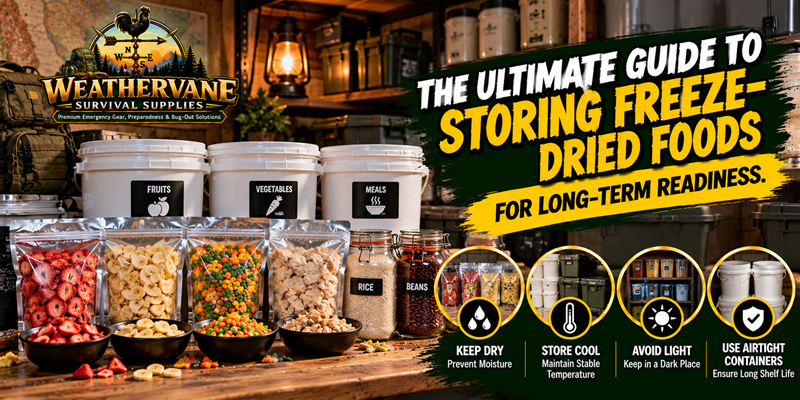
The Ultimate Guide to Storing Freeze-Dried Foods for Long-Term Readiness – When building a resilient home preparedness plan, securing a reliable supply of non-perishable food is a fundamental priority. Municipal power disruptions, severe weather emergencies, and global supply chain vulnerabilities can limit grocery store access with little warning. Among all long-term food preservation methods, freeze-dried food stands out as the gold standard for emergency storage.
The Ultimate Guide to Storing Freeze-Dried Foods for Long-Term Readiness
Freeze-dried meals offer an exceptional shelf life of up to twenty-five to thirty years while retaining up to ninety-seven percent of their original nutritional value. Understanding the preservation science behind freeze-dried food and implementing optimal storage protocols ensures your long-term food supply remains safe, nutritious, and delicious when you need it most.
Understanding the Freeze-Drying Preservation Process
Unlike traditional dehydration, which uses high heat that degrades food texture and nutrient density, freeze-drying utilizes a process called sublimation. Freshly cooked or harvested foods are rapidly frozen down to sub-zero temperatures. The food is then placed inside a vacuum chamber where slight heat is applied.
Under vacuum pressure, frozen water inside the food transitions directly from ice into water vapor without passing through a liquid phase. Removing nearly ninety-nine percent of moisture halts enzymatic activity and prevents microbial growth, mold, and spoilage completely.
Key Environmental Enemies of Stored Freeze-Dried Food
While freeze-dried food is engineered for long-term stability, improper storage conditions can compromise its shelf life prematurely. Protecting your investment requires mitigating five primary environmental threats:
-
Oxygen: Oxygen causes oxidation, which degrades food flavor, vitamins, and physical texture over time.
-
Moisture: Reintroducing even trace ambient humidity into freeze-dried food reactivates enzymatic breakdown and creates an environment where mold can thrive.
-
Heat: High ambient storage temperatures accelerate food breakdown and reduce long-term shelf life significantly.
-
Light: Direct sunlight and harsh ultraviolet rays break down delicate vitamins and cause food discoloration inside transparent containers.
-
Pests: Rodents and insects can chew through thin plastic bags or cardboard boxes to reach stored food reserves.
Optimal Packaging Solutions for Long-Term Food Readiness
To protect freeze-dried foods against environmental degradation, select packaging materials specifically engineered for long-term food preservation.
1. Heavy-Duty Mylar Bags with Oxygen Absorbers
Mylar bags constructed from multi-layer aluminum foil are lightweight, flexible, and completely impervious to light, air, and moisture.
-
Oxygen Absorber Integration: Always place food-grade iron-based oxygen absorbers inside Mylar bags prior to heat-sealing the top seam. Oxygen absorbers reduce interior air levels to under 0.01%, creating a protective nitrogen-rich environment.
-
Storage Protection: Store sealed Mylar bags inside rigid food-grade plastic buckets to protect them from physical punctures and rodent attacks.
2. Commercial #10 Metal Cans
Heavy-duty metal #10 cans represent the industry benchmark for commercial long-term food storage.
-
Durability: Sealed steel cans offer complete protection against light, moisture, oxygen, and pests.
-
Stackability: Their rigid structural strength allows homeowners to stack cans high on metal shelving units, maximizing floor space in pantries or basements.
Best Practices for Climate-Controlled Storage Environments
Where you store your emergency food reserves directly determines how long they remain viable. Follow these facility guidelines to maximize food longevity:
-
Maintain Cool Temperatures: Keep your food storage area at a consistent temperature between 55°F and 70°F (12°C to 21°C). Storing food in hot attics or uninsulated garages can cut its shelf life in half.
-
Keep Storage Off Concrete Floors: Elevate plastic pails and boxes onto wooden pallets or metal wire shelves. Direct contact with concrete floors can draw moisture upward through condensation. Emergency Methodologies for Treating Contaminated Water in the Field
-
Establish First-In, First-Out (FIFO) Rotation: Label all cans and Mylar bags clearly with purchase and packaging dates. Rotate your stock by consuming older inventory first during routine preparedness drills.
Final Thoughts
Storing freeze-dried foods is one of the most effective ways to guarantee long-term nutritional security for your household. By taking advantage of Mylar packaging, oxygen absorbers, and #10 metal cans while keeping your storage environment cool and dry, you ensure your family remains well-fed during any unexpected crisis. Invest in quality freeze-dried supplies today to build an enduring foundation of home readiness for tomorrow.