How to Rainwater Harvest Safely for Emergency Backup Water Supplies – Rainwater harvesting is one of the most effective ways to secure an independent water supply during long-term emergencies. When municipal utility networks collapse or local water sources become contaminated, collecting precipitation directly from your roof provides a continuous stream of fresh water. However, untreated rainwater is rarely safe to drink straight from the collection barrel.
How to Rainwater Harvest Safely for Emergency Backup Water Supplies
Collecting rainwater safely requires a structured system designed to filter out debris, prevent biological contamination, and sanitize the water before consumption. Understanding the mechanics of safe rainwater harvesting allows homeowners to build an efficient backup supply that provides peace of mind during prolonged crises.
The Benefits and Risks of Rainwater Harvesting
Rainwater is naturally soft, free from added municipal chemicals, and abundant during stormy seasons. Utilizing rain runoff reduces your reliance on bottled reserves and extends your off-grid survival capabilities.
Despite its pure origin in the atmosphere, rainwater absorbs environmental pollutants as it falls and hits your roof. Bird droppings, decaying leaves, atmospheric dust, asphalt shingle particles, and toxic roof coatings can contaminate collected water. Therefore, establishing proper collection protocols is essential to prevent waterborne illnesses.
Essential Components of a Safe Harvesting System
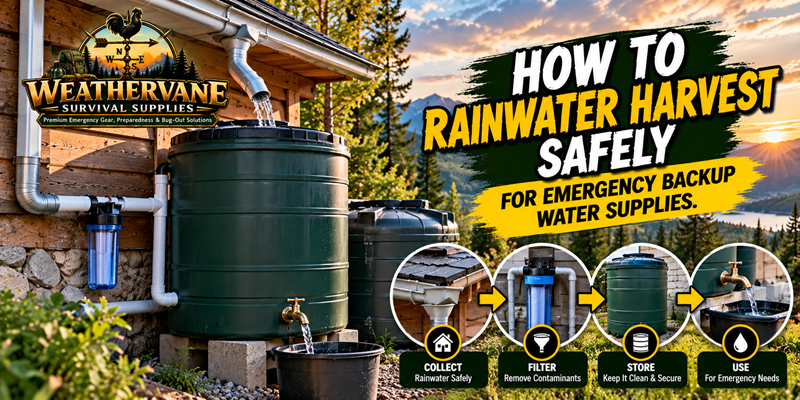
A safe residential rainwater catchment system relies on a multi-stage filtration process. Each component plays a specific role in keeping the water clean before it reaches your storage tanks.
1. Clean Roof Catchment Surfaces
The type of roofing material installed on your home dictates the initial quality of your harvested water.
-
Optimal Surfaces: Metal roofs, corrugated tin, and slate shingles are ideal because they provide a smooth, non-porous surface that resists bacterial growth and chemical leaching.
-
Surfaces to Avoid: Old asphalt shingles, copper gutters, and wood shake roofs can leach toxic heavy metals or petroleum-based chemicals into your water.
2. Gutter Guards and Mesh Screens
Gutters direct rainfall from the roof to your storage containers. Installing fine mesh screens over your gutters prevents large debris like twigs, leaves, and pine needles from entering the downspouts.
3. First-Flush Diverters
A first-flush diverter is a vital safety mechanism in rainwater harvesting. When rain begins, the initial runoff washes away airborne dust, bird droppings, and pollen resting on the roof surface.
-
How It Works: The diverter routes the dirtiest first few gallons of rainwater into a separate vertical pipe.
-
Automatic Diversion: Once the diversion pipe fills, a floating ball seals the chamber, allowing only clean subsequent rainwater to flow into your main storage tank.
4. Food-Grade Storage Barrels
Always store harvested rainwater in opaque, food-grade polyethylene drums or high-capacity cisterns. Opaque containers block sunlight, preventing green algae growth inside the water tank. Ensure all inlet ports feature fine insect screens to stop mosquitoes from breeding in standing water.
Treatment Methods for Making Rainwater Potable
While harvested rainwater is perfectly suitable for washing clothes, flushing toilets, and watering crops, it must undergo thorough purification before being used for drinking or food preparation.
-
Pre-Filtration: Pass the harvested water through a sediment filter (such as 5-micron woven polypropylene) to remove fine suspended silt, pollen, and microscopic rust.
-
Biological Filtration: Run the water through a high-quality hollow-fiber micro-filter or ceramic filter to eliminate bacteria, protozoa, and parasites.
-
Chemical Disinfection or UV Sterilization: Treat filtered rainwater with food-grade water purification tablets, unscented liquid bleach, or pass it through an ultraviolet (UV) lamp. UV light neutralizes microscopic viruses without leaving a chemical aftertaste. Evaluating Portable Water Purification Systems for Off-Grid Survival
-
Activated Carbon Polishing: Use an activated carbon block filter as a final step to remove organic compounds, unpleasant odors, and residual chemical tastes.
Essential Maintenance Rules for Long-Term Safety
Maintaining a rainwater harvesting system requires routine inspection to ensure consistent water quality throughout the year.
-
Clear Gutters Bi-Monthly: Remove accumulated leaves and debris from gutters and downspout strainers to maintain rapid water flow and prevent stagnant pools.
-
Drain First-Flush Pipes: Empty the first-flush diverter pipe after every heavy storm so it is ready to capture contaminated runoff during the next rainfall.
-
Inspect Storage Tanks Annually: Check internal tank walls for sediment buildup or biofilm formation. Drain and scrub storage vessels with food-grade cleaning agents once a year.
Final Thoughts
Safe rainwater harvesting is a powerful asset for residential emergency readiness. By installing mesh screens, utilizing a first-flush diverter, and applying reliable filtration and purification methods, you can turn natural precipitation into a clean, renewable water supply. Take proactive measures to install a safe catchment system today to ensure your household remains resilient during future water shortages.