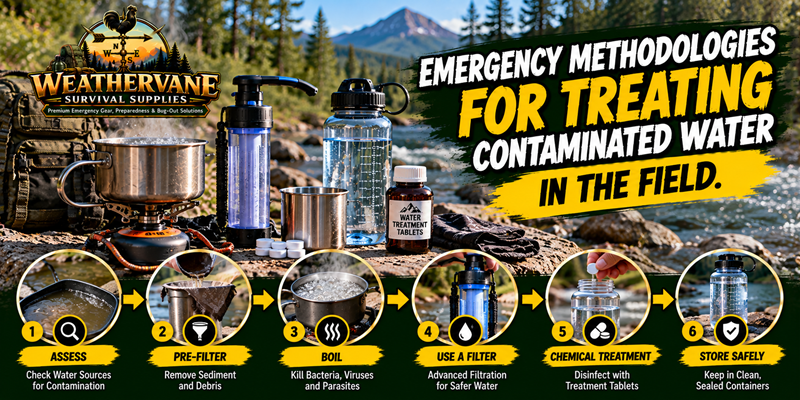
Emergency Methodologies for Treating Contaminated Water in the Field – In emergency wilderness survival or severe disaster scenarios, securing safe drinking water is your immediate priority. Natural water sources found in the wild—such as rivers, streams, ponds, and floodwaters—frequently contain dangerous biological contaminants, agricultural chemical runoff, and heavy suspended sediments. Ingesting contaminated water can lead to severe gastrointestinal illnesses, rapid dehydration, and debilitating physical weakness.
Emergency Methodologies for Treating Contaminated Water in the Field
When manufactured filtration devices fail, become lost, or run out of battery power, knowing how to apply emergency field treatment methodologies is essential. Mastering traditional and improvised water treatment techniques ensures you can produce safe, drinkable water directly from natural environments using basic tools.
Understanding Field Contaminants and Risks
Water contamination in the field generally falls into three primary categories: physical suspended solids (silt, clay, and organic matter), biological pathogens (bacteria, protozoa, and viruses), and chemical pollutants.
Physical sediments clog downstream filtration media and reduce chemical treatment efficiency, while biological pathogens pose the most immediate threat to human health. An effective emergency treatment strategy follows a structured multi-stage approach: clarification first, followed by biological disinfection.
Stage 1: Pre-Filtration and Clarification Techniques
Attempting to disinfect murky or muddy water directly reduces the effectiveness of chemical agents and heat distribution. Clarifying turbid water beforehand is critical for successful field purification.
1. Improvised Sediment Filters
Constructing a tiered gravity filter using natural materials removes large floating particles and suspended dirt.
-
Layering Structure: Cut the bottom off a plastic bottle, turn it upside down, and line the neck with a clean cloth or coffee filter. Layer fine sand, crushed charcoal, coarse sand, and small pebbles sequentially from bottom to top.
-
Mechanism: As turbid water trickles down through the layers, charcoal absorbs organic odors while sand traps fine particulates.
2. Natural Flocculation and Settling
If sand is unavailable, allow muddy water to settle in a container for several hours. Adding natural coagulants—such as crushed wild pine seeds or non-toxic wood ash—causes microscopic clay particles to bind together and sink to the bottom, leaving clear water above.
Stage 2: Biological Disinfection Methodologies
Once water is physically clear, it must undergo biological disinfection to destroy microscopic pathogens.
1. Thermal Disinfection (Boiling)
Boiling water remains the absolute gold standard for field sterilization because it destroys all classes of biological pathogens, including heat-resistant protozoan cysts, bacteria, and viruses.
-
Execution: Bring clarified water to a rolling boil for at least one full minute at sea level. At high elevations above 6,500 feet (2,000 meters), maintain a continuous rolling boil for three minutes to compensate for lower atmospheric pressure and lower boiling temperatures.
-
Key Advantage: Thermal boiling requires no specialized chemicals and remains effective regardless of slight water turbidity.
2. Chemical Disinfection (Household Bleach)
Regular, unscented liquid household bleach containing 6% to 8.25% sodium hypochlorite serves as a highly effective field disinfectant.
-
Dosage: Add 2 drops of unscented liquid bleach per quart (or liter) of clear water. If the water is cold or slightly cloudy, double the dosage to 4 drops.
-
Reaction Time: Stir thoroughly and let the treated water stand for at least 30 minutes in a covered container. The water should retain a slight chlorine odor; if no smell is present, repeat the dosage and wait another 15 minutes.
3. Solar Water Disinfection (SODIS Method)
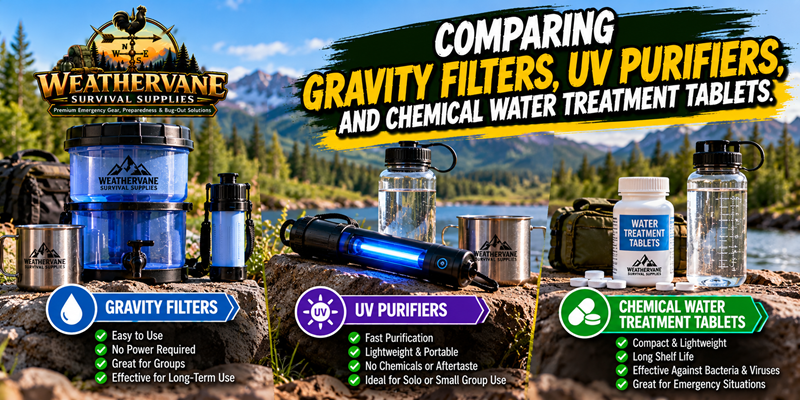
The SODIS method utilizes solar ultraviolet (UV-A) radiation and elevated temperatures to disinfect small batches of water when fuel and chemicals are unavailable. Comparing Gravity Filters, UV Purifiers and Chemical Water Treatment Tablets
-
Execution: Fill clear PET plastic bottles with clarified water and lay them horizontally on a dark surface exposed to direct sunlight.
-
Duration: Leave the bottles exposed to bright sunlight for at least six hours. In cloudy or overcast weather, extend the exposure time to two full days.
Key Field Safety Practices
To avoid recontaminating treated water, maintain strict field hygiene protocols:
-
Separate Vessels: Never use the same container for gathering raw stream water and storing disinfected drinking water without thoroughly washing it first.
-
Protect Pouring Rims: Wipe down the outer threads and rim of your storage bottle with clean treated water before drinking.
-
Store in Dark Places: Keep disinfected water covered in cool, dark environments to suppress secondary bacterial growth over extended periods.
Final Thoughts
Understanding emergency methodologies for treating contaminated water in the field provides a life-saving layer of self-reliance during severe crises. By combining pre-filtration clarification with reliable disinfection methods like boiling, chemical dosing, or solar radiation, you can convert hazardous field water into safe hydration. Practice these foundational survival techniques during peaceful conditions so you remain confident and prepared whenever clean water access is compromised.