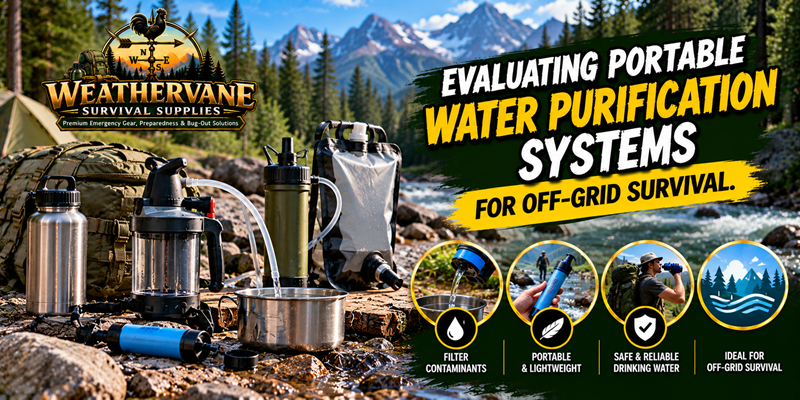
Evaluating Portable Water Purification Systems for Off-Grid Survival – Clean drinking water is the most vital necessity when surviving off the grid or navigating outdoor emergencies. In backcountry environments or during municipal infrastructure collapses, natural water sources like rivers, lakes, and streams often carry invisible threats. Pathogens such as bacteria, protozoa, viruses, and toxic sediments can cause severe gastrointestinal illness within hours.
Evaluating Portable Water Purification Systems for Off-Grid Survival
Evaluating portable water purification systems allows survivalists and outdoor enthusiasts to select the right filtration technology for their specific field requirements. Understanding how different purification methods function ensures you can transform questionable field water into safe hydration.
Understanding the Difference Between Filtration and Purification
Before choosing a system, it is crucial to understand the distinction between water filters and water purifiers. While many people use the terms interchangeably, they address different contamination levels.
-
Water Filters: Use physical micro-membranes to strain out sediment, protozoa (such as Giardia and Cryptosporidium), and bacteria (such as E. coli and Salmonella). Filters work exceptionally well for backcountry freshwater sources in North America and Europe.
-
Water Purifiers: Go a step further by neutralizing or removing microscopic viruses (such as Hepatitis A and Norovirus) alongside bacteria and protozoa. Purifiers are necessary when sourcing water near urban areas, agricultural runoffs, or developing countries with compromised sanitation systems.
Core Types of Portable Water Purification Systems
Modern survival technology offers several portable purification systems, each tailored to different operational styles and group sizes.
1. Pump-Action Micro-Filters
Pump filters utilize a hand pump to draw water through a porous ceramic or hollow-fiber membrane cartridge into a clean container.
-
Advantages: Allows you to draw water from shallow or muddy puddles without clogging quickly. Many models include activated carbon cores that improve water taste and absorb chemicals.
-
Considerations: Requires manual physical labor and periodic cleaning of the internal filter element in the field.
2. Gravity-Fed Filtration Systems
Gravity systems consist of a dirty water reservoir hung from a tree branch, which drains through an inline filter into a clean collection vessel below.
-
Advantages: Requires zero manual pumping and can filter large volumes of water passively while you set up camp. Excellent for group survival scenarios.
-
Considerations: Demands a fixed elevated anchor point and takes up slightly more space in a bug-out bag.
3. Squeeze Filters and Straw Purifiers
Ultralight squeeze filters screw directly onto standard plastic water bottles or flexible pouches, allowing users to drink directly from natural sources or squeeze water into containers.
-
Advantages: Extremely lightweight, highly affordable, and compact enough to fit inside a jacket pocket.
-
Considerations: Flow rates can slow down over time if dirty water contains heavy silt or clay particles.
4. Ultraviolet (UV) Light Purifiers
Handheld UV devices emit high-intensity ultraviolet rays into water bottles to destroy the DNA of bacteria, viruses, and protozoa within seconds.
-
Advantages: Fast purification process that leaves no chemical aftertaste and successfully targets viruses.
-
Considerations: Requires charged batteries to operate and does not remove physical dirt or cloudy sediments from murky water.
5. Chemical Purification Tablets
Chlorine dioxide or iodine tablets represent the ultimate low-profile emergency water treatment solution.
-
Advantages: Virtually weightless and immune to mechanical failures or freezing temperatures.
-
Considerations: Requires a wait time of 30 minutes to four hours to neutralize pathogens completely and can leave a slight chemical taste.
Key Evaluation Criteria for Field Readiness
Selecting the optimal system for your kit requires weighing performance factors against your survival environment.
-
Pore Size Rating: Look for filters rated at 0.1 microns or smaller to ensure complete bacterial and protozoan removal.
-
Filter Lifespan and Maintenance: Evaluate how many liters a filter can process before requiring cartridge replacement or backwashing.
-
Environmental Adaptability: Ensure your device can withstand freezing temperatures, as water trapped inside hollow-fiber membranes can expand and break internal seals if frozen.
Organizations involved in legacy field survival trials often emphasize testing gear in real-world environments to verify performance. Similarly, testing your water filtration system under controlled outdoor conditions 1MPO SLOT PULSA before relying on it in an emergency prevents gear failure when clean water is most critical.
Final Thoughts
Investing in a reliable portable water purification system is one of the smartest decisions you can make for off-grid survival. Whether you prefer a passive gravity setup for group camps or a lightweight squeeze filter for rapid evacuations, matching your gear to your environment is essential. Maintain your filtration tools properly, keep chemical tablets as a lightweight backup, and always prioritize safe hydration wherever your journey takes you.