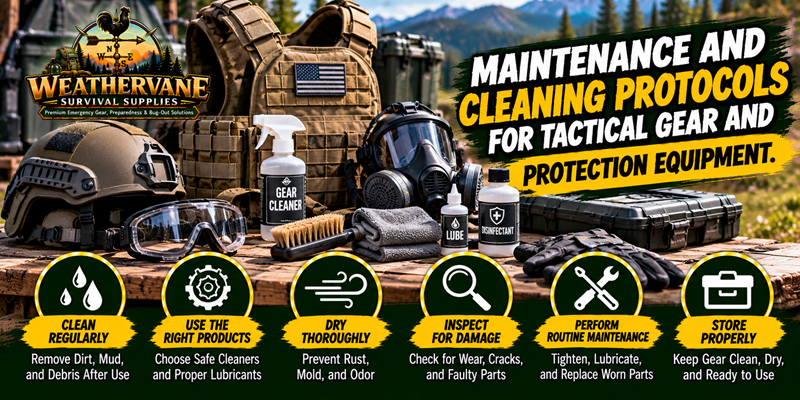
Maintenance and Cleaning Protocols for Tactical Gear and Protection Equipment – Investing in high-grade tactical gear and personal protective equipment (PPE) is essential for surviving extreme outdoor conditions and emergency hazard scenarios. However, even the most durable ballistic plates, chemical respirators, and load-bearing vests degrade rapidly without proper upkeep.
Maintenance and Cleaning Protocols for Tactical Gear and Protection Equipment
Environmental exposure to mud, sweat, salt, ultraviolet light, and chemical residues weakens physical fibers and mechanical components over time. Establishing standardized maintenance and cleaning protocols ensures your tactical equipment operates reliably when safety is on the line. Understanding how to clean, inspect, and store your gear preserves its structural integrity, extends its service life, and guarantees field readiness during critical moments.
The Hidden Hazards of Neglected Equipment
Failing to maintain tactical equipment introduces subtle operational risks that can lead to catastrophic gear failures during an emergency.
-
Fiber Degradation: Accumulated dirt, sand particles, and body salts act as micro-abrasives. As you move, these tiny particles grind against nylon webbing and Kevlar stitching, gradually snapping internal fibers.
-
Respiratory Contamination: Sweat and moisture trapped inside rubber respirator masks create an ideal breeding ground for bacteria, mold, and harmful fungi.
-
Component Seizure: Mud and rust can jam mechanical zipper tracks, weapon holsters, and quick-release buckles, preventing rapid gear deployment when speed matters most.
Step-by-Step Cleaning Protocols for Tactical Fabrics
Load-bearing equipment, plate carriers, and tactical backpacks constructed from heavy-duty fabrics require gentle yet thorough cleaning methods to avoid damaging protective coatings.
1. Dry Debris Removal
Before applying water, brush off dry dirt, dried mud, and surface dust using a soft-bristle nylon brush. Vacuum out internal pockets and hook-and-loop (Velcro) panels to remove trapped lint and sand grains.
2. Manual Hand Washing
Never wash tactical nylon gear or plate carriers in commercial washing machines or dry-cleaning units. Agitation cycles can tear delicate stitching, while hot water breaks down water-resistant polyurethane coatings.
-
Washing Method: Submerge equipment in a tub filled with cool or lukewarm water mixed with a mild, bleach-free liquid detergent.
-
Scrubbing: Gently scrub stained areas using a soft sponge or cloth. Avoid harsh chemical stain removers or chlorine bleach, which degrade nylon strength.
3. Proper Rinsing and Air Drying
Rinse gear thoroughly with cold tap water until all soap suds are completely removed. Residual soap attracts dirt faster during future field deployments. Hang items to dry naturally on heavy-duty plastic hangers in a well-ventilated, shaded area. Keep equipment away from direct sunlight, as high heat and ultraviolet rays cause fabric brittleness and color fading.
Sanitizing Respiratory and Personal Protection Gear
Rubber elastomeric masks, chemical splash goggles, and hard helmets require specialized sanitizing steps to preserve sensitive silicone seals and optical clarity.
-
Disassemble Components: Remove filter canisters, intake valves, and elastic head straps from respirator bodies prior to cleaning. Never submerge CBRN filter canisters in water.
-
Wash and Sanitize: Clean mask facepieces in warm water mixed with mild neutral soap. Wipe down internal surfaces with alcohol-free sanitizing wipes to eliminate bacteria without degrading rubber seals.
-
Inspect Valves and Gaskets: Inspect thin rubber inhalation and exhalation valves for cracks, warping, or stiffness. Replace stiff gaskets immediately to ensure an airtight seal.
In complex system management and technical operational structures, implementing routine maintenance schedules prevents unexpected operational disruptions. Applying a systematic inspection routine to your physical protective gear similarly ensures that every valve, strap, and seam remains in peak operating condition. Selecting Reliable Tactical Knives and Multi-Tools for Outdoor Survival
Storage Protocols for Extended Equipment Longevity
How you store tactical gear between field uses directly impacts its long-term durability. Follow these storage best practices to maintain gear readiness:
-
Climate-Controlled Environment: Store equipment in a cool, dry, dark location maintaining temperatures between 50°F and 70°F (10°C to 21°C) with low relative humidity.
-
Avoid Compression: Never store ballistic armor, helmets, or insulated outerwear tightly compressed inside small duffel bags for long periods. Store body armor flat or on wide, padded hangers.
-
Utilize Desiccant Packs: Place silica gel packets inside storage totes to absorb ambient air moisture and prevent mildew growth on canvas and leather components.
Final Thoughts
Adhering to strict maintenance and cleaning protocols for tactical gear and protection equipment is an indispensable part of long-term survival planning. By committing to regular hand washing, gentle sanitization, routine seal inspections, and proper climate-controlled storage, you ensure your equipment retains its protective capabilities. Maintain your protective investment today so your gear delivers maximum performance when crisis strikes.