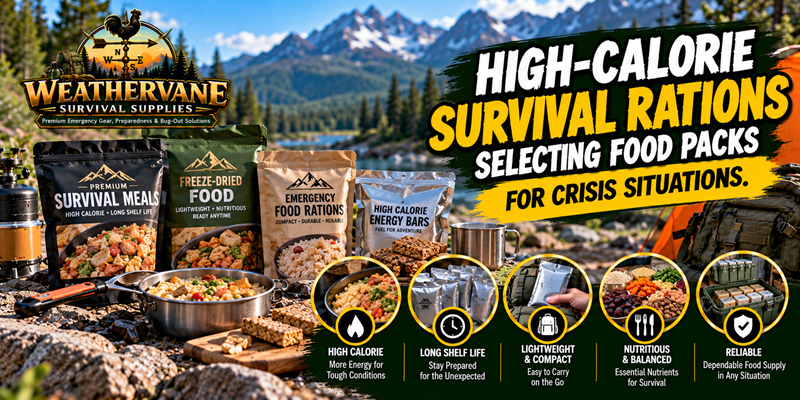
High-Calorie Survival Rations: Selecting Food Packs for Crisis Situations – During extreme crisis situations, maintaining adequate energy levels is essential for physical stamina and clear decision-making. High-stress environments, cold weather exposure, and arduous foot travels consume body calories at an accelerated rate. Carrying bulky fresh food or complex cooking equipment during an evacuation is often impractical.
High-Calorie Survival Rations: Selecting Food Packs for Crisis Situations
Selecting specialized high-calorie survival rations provides a dense, stable source of energy in a compact format. Understanding nutritional balance, shelf-life longevity, and packaging resilience enables individuals to select food packs that will sustain bodily functions under austere conditions.
The Role of Dense Nutrition in Emergency Response
In standard daily routines, diet planning focuses on balanced caloric intake and macronutrient distribution. However, during acute emergency evacuations or grid-down scenarios, the primary goal shifts toward rapid energy replenishment and physiological survival.
High-calorie survival rations concentrate maximum energy into minimal physical volume. Compact energy density reduces pack weight, conserves backpack space, and provides immediate metabolic fuel without requiring lengthy cooking preparation or water consumption.
Types of High-Calorie Survival Food Packs
Different emergency scenarios require tailored nutritional solutions. Selecting the right survival ration depends on whether you are remaining at home or evacuating on foot. The Ultimate Guide to Storing Freeze-Dried Foods for Long-Term Readiness
1. Compressed Emergency Ration Bars
Often referred to as life raft rations or tactical food blocks, compressed ration bars represent the classic compact food solution.
-
Nutritional Composition: Formulated primarily from wheat flour, vegetable fats, and sugars, these bars yield 2,000 to 3,600 calories per block package.
-
Key Advantages: Non-thirst-provoking formulation means they do not draw moisture from your body. They require zero heating, zero water addition, and can withstand extreme temperature fluctuations from -40°F to 149°F (-40°C to 65°C).
2. Meals Ready-to-Eat (MREs)
MREs are self-contained military-grade meals packaged in heavy-duty foil pouches.
-
Nutritional Composition: A complete MRE provides roughly 1,200 to 1,500 calories per meal, including entrees, sides, spreads, and high-energy drink mixes.
-
Key Advantages: Includes flameless chemical heaters that warm the main entree using a small amount of water. They offer high culinary variety and psychological comfort during stressful events.
3. Nutrient-Dense Survival Spreads and Pouches
High-fat spreads, such as fortified peanut butter, almond butter, and energy gels, provide dense nutrition in small squeeze tubes.
-
Nutritional Composition: High in healthy lipids and proteins, delivering quick calories alongside sustained satiety.
-
Key Advantages: Highly portable, easy to consume on the move, and ideal for quick energy spikes during rapid evacuations.
Critical Selection Criteria for Crisis Rations
To ensure your chosen food packs perform reliably during a disaster, evaluate options against four fundamental criteria:
-
Calorie-to-Weight Ratio: Aim for food items that provide at least 120 to 150 calories per ounce (28 grams). High calorie density prevents physical exhaustion without overloading your backpack.
-
Water Requirement: Select rations that do not require precious drinking water for preparation unless clean water supplies are fully guaranteed.
-
Packaging Durability: Ensure rations are vacuum-sealed in heavy-duty multi-layer foil packaging to protect contents against water intrusion, puncture risks, and pest damage.
-
Shelf-Life Stability: Opt for food packs offering a verified shelf life of five to twenty-five years to minimize the frequency of inventory rotation.
Best Practices for Storing and Deploying Rations
Maximizing the effectiveness of your high-calorie food supplies involves proper management and distribution protocols:
-
Distribute Packs Across Gear: Keep emergency ration bars inside your bug-out bag, vehicle trunk, and office desk so high-density nutrition is always within reach.
-
Monitor Expiration Timelines: Even durable five-year ration bars require systematic checks. Inspect vacuum seals annually to ensure packaging integrity remains intact.
-
Account for Dietary Restrictions: Ensure food packs cater to specific medical needs, such as gluten sensitivities or severe food allergies, among family members.
Final Thoughts
High-calorie survival rations are an indispensable component of any crisis preparedness strategy. By prioritizing calorie-dense ration blocks, durable MREs, and low-moisture energy spreads, you guarantee immediate energy availability during high-stress evacuations. Evaluate your physical needs, select resilient food packs, and integrate high-calorie rations into your emergency gear to maintain stamina when every calorie counts.