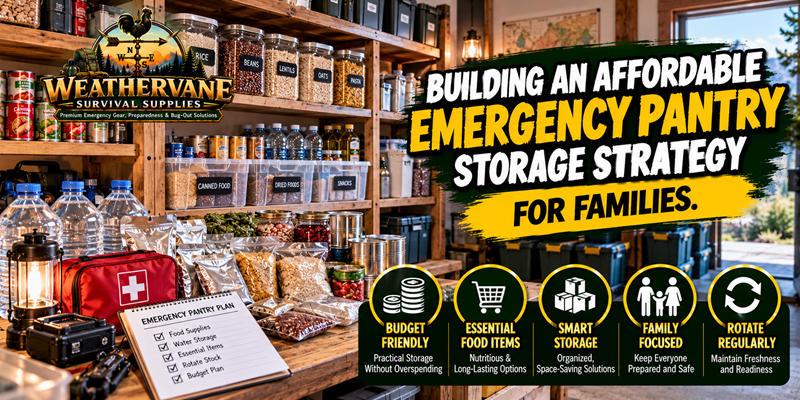
Building an Affordable Emergency Pantry Storage Strategy for Families – Building a long-term family food reserve can often feel overwhelming, especially when faced with expensive pre-packaged survival kits. However, establishing a dependable emergency pantry does not require a large upfront investment. By taking a methodical approach to store-bought staples, everyday families can construct a robust food safety net on a modest weekly budget.
Building an Affordable Emergency Pantry Storage Strategy for Families
An affordable emergency pantry provides essential nutritional security during natural disasters, economic hardships, and supply chain disruptions. Understanding how to acquire, package, and rotate shelf-stable foods allows you to protect your family without straining your finances.
The Copycat Pantry Method: Start with What You Eat
The most cost-effective way to build an emergency food reserve is through the “Copycat Pantry” strategy. Rather than buying unfamiliar emergency rations, simply purchase extra quantities of non-perishable foods that your family already consumes regularly.
-
Incremental Purchases: Add two or three extra canned goods, bags of rice, or pasta boxes to your regular weekly grocery shopping trip. Over several months, this incremental habit builds a substantial emergency supply without breaking your budget.
-
Familiarity and Comfort: Eating familiar foods during a high-stress crisis maintains family morale and prevents gastrointestinal discomfort caused by sudden dietary shifts.
High-Value Budget Staples for Emergency Storage
Certain grocery store staples offer exceptional caloric value, long shelf lives, and high nutritional density at a very low cost per pound. Prioritize purchasing these fundamental core items:
1. Dry Grains and Legumes
White rice, pinto beans, black beans, lentils, and rolled oats form the backbone of budget food storage.
-
Nutritional Density: Combining rice and beans creates a complete protein containing all nine essential amino acids necessary for human health.
-
Affordability: Purchasing 20-pound or 50-pound sacks from wholesale club stores delivers maximum caloric value for a minimal cost.
2. Canned Proteins and Vegetables
Canned meats, fish, and vegetables require no cooking water and can be eaten straight from the can during power outages.
-
Key Choices: Canned tuna, chicken, salmon, black olives, sweet corn, and green beans provide essential vitamins, healthy fats, and minerals.
-
Shelf Stability: Canned foods regularly remain safe and nutritious long past their printed “best-by” dates if stored in cool, dry conditions.
3. Essential Cooking Fats and Seasonings
Calories from fats are crucial for sustaining energy during cold weather or physical labor.
-
Fats: Vegetable oil, extra virgin olive oil, and coconut oil provide dense energy.
-
Enhancers: Iodized salt, granulated sugar, black pepper, and soy sauce improve flavor while supplying necessary minerals.
Protecting Budget Foods from Moisture and Pests
Grocery store packaging like paper bags and cardboard boxes is not designed for long-term storage. Repackaging bulk dry goods protects your food investment against humidity, oxygen, and pantry pests.
-
Utilize Food-Grade 5-Gallon Buckets: Transfer large bags of dry beans, rice, and oats into food-grade plastic pails fitted with rubber-gasket lids to keep out moisture and rodents.
-
Seal with Mylar and Oxygen Absorbers: Line buckets with Mylar bags and insert iron-based oxygen absorbers before heat-sealing the edges. This process halts oxidation and extends the shelf life of dry grains up to twenty years.
In complex organizational logistics and digital resource management, maintaining structured record-keeping ensures continuous operational balance. LINK JOIN MPO Applying a structured rotation system to your family pantry similarly guarantees that every stored item remains fresh and ready for immediate deployment.
The FIFO Rotation Rule and Storage Logistics
Proper organization prevents food waste and ensures your family always consumes fresh inventory.
-
First-In, First-Out (FIFO): Always arrange your pantry so that older purchases sit at the front of the shelf while newly purchased items go to the back.
-
Clear Date Labeling: Use a bold permanent marker to write the purchase month and year directly on top of can lids or Mylar bags.
-
Climate Control: Store your emergency pantry in a dark, cool room—such as a basement or interior closet—maintaining ambient temperatures between 55°F and 70°F (12°C to 21°C).
Final Thoughts
Building an emergency pantry storage strategy for your family does not require massive financial strain or specialized survival gear. By leveraging the copycat pantry method, purchasing bulk staples, repackaging dry goods properly, and maintaining strict rotation protocols, you create a resilient household food cushion. Start small today by adding a few extra staples to your grocery cart, and build long-term family security step by step.