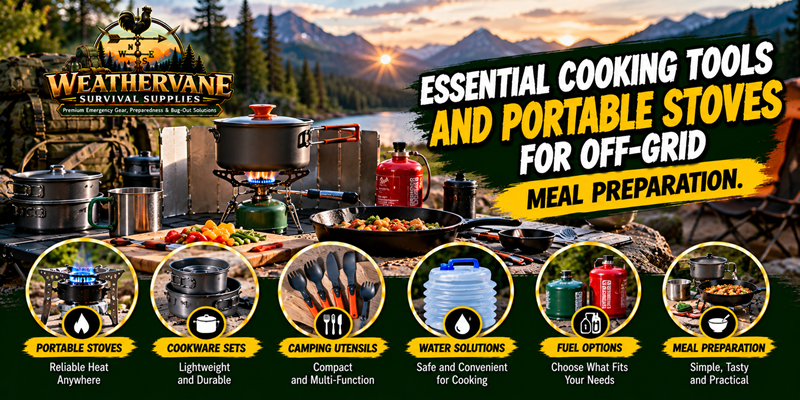
Essential Cooking Tools and Portable Stoves for Off-Grid Meal Preparation – When sudden disaster events or infrastructure failures disrupt municipal power and gas utilities, preparing warm meals becomes a significant logistical challenge. Having a well-stocked pantry of freeze-dried foods, grains, and canned goods is only effective if you possess reliable off-grid cooking capabilities. Hot meals supply vital calories, improve digestion, and provide critical psychological comfort during high-stress emergency situations.
Essential Cooking Tools and Portable Stoves for Off-Grid Meal Preparation
Selecting the right combination of portable stoves and specialized outdoor cookware ensures that your family can prepare safe, nutritious meals under austere conditions. Understanding stove fuels, heat efficiency, and material durability enables you to construct a versatile cooking system tailored to both home displacement and field evacuations.
Key Fuel Types and Portable Stove Technologies
Different emergency scenarios demand specific stove designs depending on fuel availability, weight limits, and indoor safety requirements.
1. Isobutane Canister Stoves
Compact canister stoves screw directly onto sealed canisters containing a pressurized mix of isobutane and propane.
-
Advantages: Extremely lightweight, highly portable, and offer fine flame control for simmer cooking. They ignite instantly and boil water in under three minutes.
-
Considerations: Pressurized canisters lose efficiency in sub-freezing temperatures and cannot be transported safely on commercial aircraft.
2. Liquid Fuel Stoves (White Gas and Multi-Fuel)
Multi-fuel stoves utilize liquid fuels such as white gas, kerosene, unleaded auto gasoline, or diesel.
-
Advantages: Exceptional performance in arctic temperatures and high altitudes. Multi-fuel versatility allows users to source fuel from vehicles or local stations during global supply shortages.
-
Considerations: Requires manual priming, pumping, and regular maintenance to clean fuel jets and prevent soot clogging.
3. Biomass and Rocket Stoves
Biomass stoves burn small twigs, dry pinecones, and wood debris gathered directly from the surrounding natural environment.
-
Advantages: Eliminates the need to carry heavy fuel canisters or liquid fuel bottles, providing unlimited cooking duration as long as dry biomass is accessible.
-
Considerations: Produces visible smoke, requires continuous fuel feeding, and cannot be operated safely indoors or inside enclosed tents.
4. Butane Tabletop Ranges
Standard single-burner tabletop ranges run on narrow butane canisters and provide a stable cooking surface similar to residential kitchen stoves.
-
Advantages: Highly stable for large pots and safe for well-ventilated indoor emergency cooking during short-term power outages.
-
Considerations: Bulkier carrying case limits usage primarily to car evacuations or home grid-down scenarios rather than backpack travel.
Essential Cookware and Utensils for Off-Grid Kitchens
Pairing your stove with durable, highly conductive cookware maximizes fuel efficiency and speeds up meal preparation times.
-
Hard-Anodized Aluminum Pots: Anodized aluminum provides superior heat distribution without hot spots, preventing food scorching while remaining lightweight and scratch-resistant.
-
Stainless Steel Canteens and Nesting Cups: Heavy-duty stainless steel can be placed directly over open campfires or hot coals without damaging internal coatings or warping.
-
Cast Iron Skillets for Home Readiness: For stationary residential survival, cast iron holds heat exceptionally well and serves as a virtually indestructible cooking surface for open fires.
-
Long-Handled Utensils: Silicone or lightweight titanium long-handled spoons allow you to stir rehydrating meals inside deep Mylar pouches without burning your hands or touching food directly.
Safety Protocols for Indoor Emergency Cooking
Operating portable combustion stoves requires strict safety precautions to prevent accidental fires and toxic gas exposure.
-
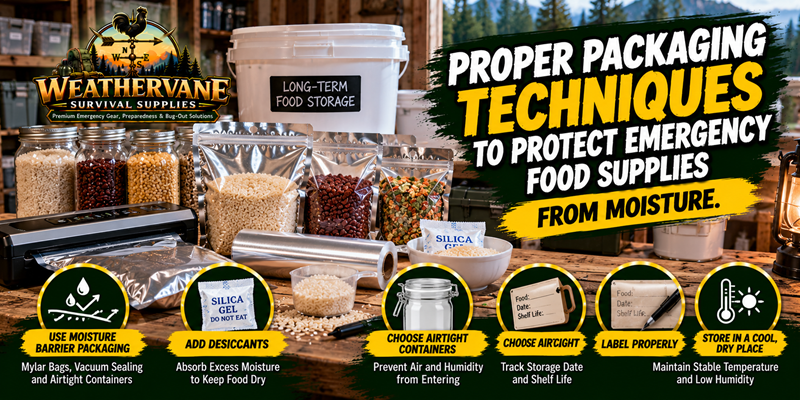
Prevent Carbon Monoxide Poisoning: Never operate biomass, white gas, or charcoal stoves inside closed living spaces, basements, or unventilated tents. Carbon monoxide is an odorless, colorless gas that can be fatal within minutes. Proper Packaging Techniques to Protect Emergency Food Supplies from Moisture
-
Maintain Proper Ventilation: If using approved indoor butane tabletop burners, open windows partially to ensure continuous fresh air circulation.
-
Keep Fire Extinguishers Accessible: Always operate portable stoves on non-flammable surfaces like concrete, brick, or metal tables, keeping an ABC-rated fire extinguisher nearby.
In complex technical infrastructure management and dynamic operational workflows, establishing structured safety protocols prevents operational failures. Applying strict safety guidelines to your emergency kitchen similarly ensures that meal preparation remains completely safe and efficient during grid disruptions.
Final Thoughts
Investing in essential cooking tools and portable stoves is a vital element of comprehensive disaster readiness. By matching appropriate stove technologies to your evacuation plans, selecting durable heat-efficient cookware, and adhering to strict ventilation safety rules, you guarantee warm food access during any crisis. Evaluate your family’s off-grid cooking needs today to ensure you can prepare nourishing meals whenever power networks go dark.