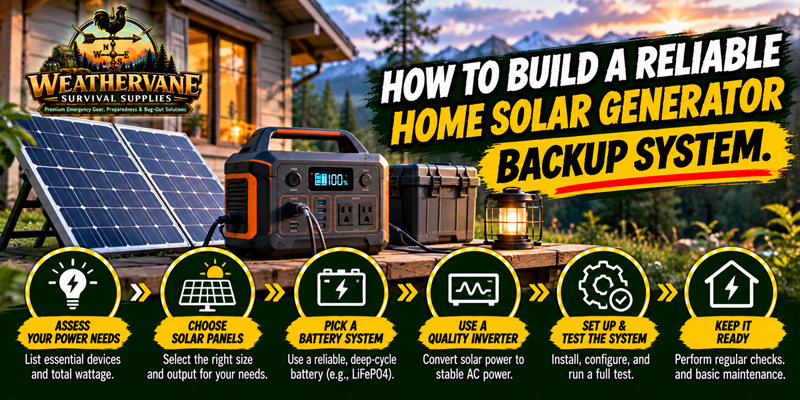
How to Build a Reliable Home Solar Generator Backup System – Severe weather events, structural grid failures, and unexpected electrical blackouts emphasize the need for self-sustaining energy sources. When public utility lines stop delivering electricity, maintaining household lights, running medical devices, and preserving food become urgent priorities. Gasoline generators deliver immediate electrical output, yet their reliance on liquid fuel, loud engine noise, and deadly exhaust vapors limit indoor deployment.
How to Build a Reliable Home Solar Generator Backup System
Assembling a reliable home solar generator setup provides a clean, silent, and renewable energy alternative for residential readiness. By evaluating daily power loads, choosing compatible internal components, and optimizing solar capture, homeowners can secure independent electricity during prolonged blackouts.
Key Components of a Standalone Solar Power System
Unlike traditional fuel-burning generators, a DIY solar setup links distinct electronic units to gather, store, and convert sunlight into usable energy.
-
Photovoltaic (PV) Panels: Solar arrays transform natural sunlight into direct current (DC) electricity. Options range from permanent roof-mounted panels to portable folding modules.
-
Solar Charge Controller: This regulator manages incoming voltage and electrical current from your solar panels. It prevents battery overcharging and optimizes power transfer efficiency.
-
Battery Storage Array: The storage bank holds generated electricity for night usage or overcast weather conditions.
-
Power Inverter: Energy stored inside batteries exists as low-voltage DC power. The inverter converts this DC energy into standard alternating current (AC) power to run household appliances safely.
Phase 1: Evaluating Essential Energy Load Requirements
Prior to buying hardware components, you must calculate your household’s non-negotiable electrical needs during an emergency. Trying to supply an entire house demands massive industrial equipment, whereas focusing exclusively on survival essentials keeps equipment costs manageable.
-
List Critical Household Loads: Itemize essential devices like medical equipment, full-size refrigerators, LED room lighting, communications gear, and water pumps.
-
Calculate Daily Watt-Hour Needs: Multiply the operational wattage of each item by its estimated daily runtime hours. For example, a 100-watt refrigerator operating for 10 net compressor hours consumes 1,000 watt-hours (Wh) every day.
-
Determine Storage Reserves: Size your total battery capacity to cover at least two to three days of essential electrical needs without relying on solar recharge.
Phase 2: Selecting Battery Chemistries and System Voltage
Selecting the proper battery technology determines the operational lifespan, safety, and performance of your backup power bank. Night Vision vs. Thermal Imaging: Choosing Optics for Emergency Readiness
1. Lithium Iron Phosphate (LiFePO4) Architecture
Modern solar storage designs heavily favor LiFePO4 chemistry over old-fashioned lead-acid alternatives.
-
Extended Cycle Life: LiFePO4 batteries deliver 3,000 to 5,000 charge cycles before dropping to 80 percent capacity, far outlasting conventional AGM or GEL lead-acid batteries.
-
Deeper Discharge Depth: You can safely discharge LiFePO4 batteries up to 90 or 100 percent without damaging internal cell structures.
-
Weight Advantages: They offer superior energy density, rendering the overall battery bank lighter and far easier to relocate.
2. System Voltage Configurations
Small portable setups utilize a 12-volt DC structure. However, larger residential backup systems should adopt a 24-volt or 48-volt setup. Higher operating voltages lower electrical current (amperage), enabling the use of thinner wiring while minimizing heat losses across long wire runs.
Phase 3: Matching Charge Controllers and Inverters
Proper component sizing prevents electrical hardware overheating and maximizes solar conversion rates.
-
MPPT vs. PWM Regulators: Always select Maximum Power Point Tracking (MPPT) controllers instead of basic Pulse Width Modulation (PWM) units. MPPT units adjust dynamically to solar panel voltage changes, delivering up to 30 percent higher charging efficiency during cloudy weather.
-
Pure Sine Wave Inverters: Avoid cheap modified sine wave inverters, which can damage delicate electronics like laptops, medical gear, and variable-speed motors. Pick a heavy-duty pure sine wave inverter rated to handle your maximum surge wattage requirements.
Crucial Maintenance and Safety Guidelines
Maintaining a home solar generator setup involves periodic inspection steps to ensure fast deployment when power grids collapse:
-
Install Protection Fuses: Wire inline fuses or thermal circuit breakers between your solar panels, charge controller, battery bank, and inverter to protect internal wiring against short circuits.
-
Store Energy Banks Indoors: Lithium battery cells struggle when charged under sub-freezing temperatures. Position your storage bank inside an insulated room or garage space.
-
Run Routine Battery Diagnostics: Discharge and recharge your backup storage bank every three to six months to verify cell capacity health and update monitoring software.
Final Thoughts
Building a reliable home solar generator system is one of the most effective steps toward energy independence during unexpected grid failures. By measuring daily watt-hour demands, picking long-lasting LiFePO4 battery technology, and utilizing high-efficiency MPPT controllers, you guarantee clean power for your family’s essential needs. Invest in quality solar components today to keep your lights on and your critical appliances running when the power grid goes dark.