Managing Prescription Medications and Medical Supplies During Prolonged Crises – When severe natural disasters, long-term grid outages, or global supply chain disruptions occur, accessing retail pharmacies becomes extremely difficult. For individuals managing chronic health conditions, a sudden disruption in pharmaceutical supplies poses an immediate life-threatening risk. While standard disaster planning focuses on food and water, securing continuous access to vital prescription medications is equally critical for long-term survival.
Managing Prescription Medications and Medical Supplies During Prolonged Crises
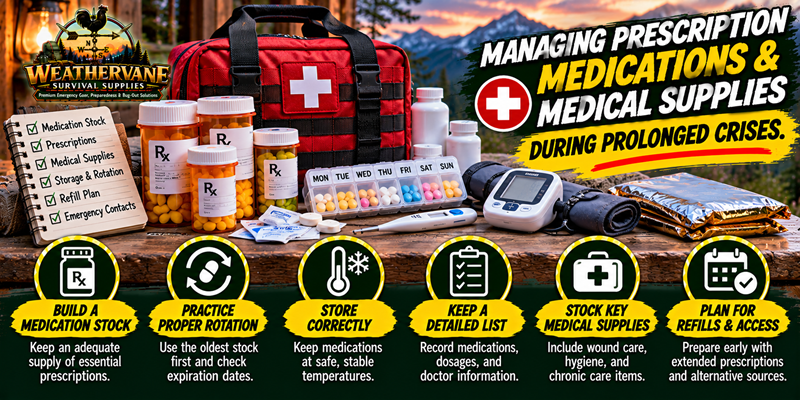
Developing a strategy for managing prescription medications and medical supplies during prolonged crises protects your family from healthcare collapse. Understanding legal stockpile methods, proper pharmaceutical storage techniques, rotation protocols, and non-prescription alternatives enables households to maintain health stability during extended emergencies.
Understanding the Vulnerabilities of Medical Supply Chains
Modern pharmaceutical delivery relies on precise, just-in-time logistics networks. Pharmacies maintain minimal local inventory, depending on daily commercial deliveries to replenish critical stocks.
During major disaster events, transportation bottlenecks, power failures, and manufacturing shutdowns quickly drain regional medical inventories. Establishing a personal medical reserve ensures that your household remains independent of commercial pharmacy operations when distribution networks collapse.
Strategies for Legally Stockpiling Prescription Medications
Building a reserve of essential prescription drugs requires working within medical and legal frameworks to avoid coverage disruptions or safety risks.
-
Request Early Refills: Submit prescription refill requests at the earliest allowable date each month (often 25 to 28 days into a 30-day supply). Over time, this habit creates a gradual surplus of several weeks.
-
Secure 90-Day Prescriptions: Ask your primary care physician to transition chronic maintenance medications from 30-day supplies to 90-day mail-order prescriptions. This strategy immediately expands your available home reserve.
-
Consult Physicians Directly: Discuss your emergency preparedness concerns with your doctor openly. Many healthcare providers will prescribe an extra month of maintenance medication or supply emergency travel prescriptions for long-term travel.
Optimizing Storage Conditions for Pharmaceutical Longevity
Medications degrade rapidly when exposed to adverse environmental factors, reducing their chemical potency and shelf stability. Essential Medical Training Skills for Handling Trauma in the Field
1. Temperature and Moisture Control
Heat and humidity accelerate chemical breakdown inside pills and liquids.
-
Avoid Bathrooms: Never store emergency medications in bathroom cabinets, where steam from showers creates high ambient humidity.
-
Cool, Dark Spaces: Store pharmaceuticals inside airtight, light-blocking containers placed within cool, dark interior closets or basements. Maintain storage temperatures between 59°F and 77°F (15°C to 25°C).
2. Managing Cold-Chain Requirements
Biologic medications—such as insulin, rheumatoid arthritis injectables, and certain vaccines—require continuous refrigeration.
-
Off-Grid Refrigeration: Secure small 12-volt portable refrigerators powered by independent solar generator setups to preserve temperature-sensitive drugs during blackouts.
-
Insulated Gel Coolers: Keep heavy-duty insulated travel cases and ice packs ready for rapid evacuations when electrical cooling is unavailable.
Implementing Rotation Protocols and Documenting Care
Proper organization prevents pharmaceutical waste and ensures stored drugs retain maximum potency during deployment.
-
First-In, First-Out (FIFO) Rotation: Always consume your oldest medication supplies first while placing newly filled prescriptions at the back of your storage area.
-
Clear Expiration Labeling: Use bold markers to highlight expiration dates on original packaging. While many solid tablets retain partial potency past printed dates, liquid antibiotics and biologics lose efficacy quickly and can become toxic.
-
Maintain Comprehensive Medical Records: Store printed copies of current medical dosages, physician contact information, allergy lists, and formal diagnosis letters inside waterproof pouches along with your physical supplies.
Stockpiling Essential Non-Prescription Medical Supplies
Pairing prescription drug reserves with essential medical equipment guarantees comprehensive health management during prolonged crises:
-
Monitoring Equipment: Keep manual blood pressure cuffs, digital glucose meters with extra test strips, pulse oximeters, and clinical thermometers accessible.
-
Over-the-Counter Equivalents: Stock generous supplies of OTC pain relievers, antihistamines, anti-diarrheal agents, and oral rehydration salts to treat secondary symptoms.
-
Sanitizing and Barrier Gear: Store sterile medical gloves, N95 respirators, isopropyl alcohol, and antiseptic wipes to maintain sterile environments during medical procedures.
Final Thoughts
Managing prescription medications and medical supplies during prolonged crises is an essential component of comprehensive family readiness. By working with healthcare providers to build legal reserves, controlling environmental storage factors, implementing strict rotation protocols, and stockpiling diagnostic gear, you safeguard your household against supply chain failures. Prepare your emergency medical inventory today to ensure continuous health security through any extended disaster.