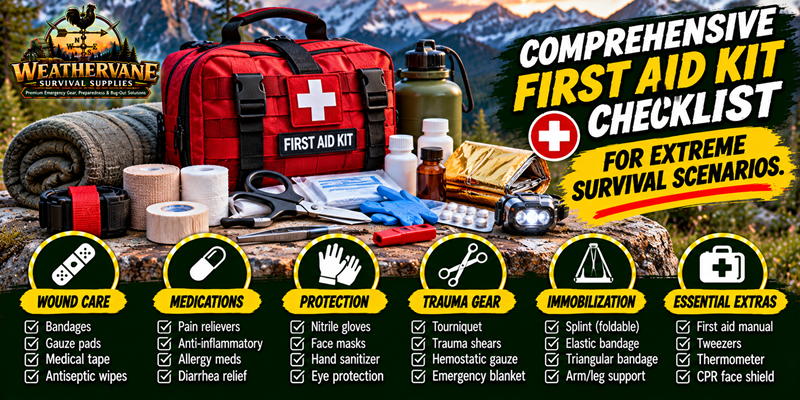
Comprehensive First Aid Kit Checklist for Extreme Survival Scenarios – When severe natural disasters, wilderness accidents, or grid failures occur, professional medical services may become completely inaccessible. In extreme survival situations, physical injuries can escalate rapidly from minor inconveniences into life-threatening emergencies. Having a well-curated medical response kit ensures that you can administer immediate critical care when emergency responders cannot reach your location.
Comprehensive First Aid Kit Checklist for Extreme Survival Scenarios
Building a comprehensive first aid kit requires moving beyond standard home adhesive bandages. Understanding trauma care, wound management, fracture stabilization, and over-the-counter medical supplies enables preppers to assemble a field-ready medical kit tailored for severe crisis events.
Understanding the Shift from Basic to Extreme First Aid
Standard commercial first aid kits focus primarily on minor home injuries like small cuts, superficial burns, and minor abrasions. While these supplies remain useful, extreme survival scenarios demand trauma-focused equipment capable of addressing severe hemorrhages, compound fractures, and environmental exposure.
A survival medical kit must balance portability with utility. Grouping medical items into functional modules allows users to locate supplies rapidly under high-stress conditions.
Core Modules of an Extreme Survival First Aid Kit
Organizing your medical checklist into clear categories ensures complete emergency coverage without missing essential trauma supplies. Winter Emergency Preparedness: Keeping Your Household Warm Without Power
1. Massive Hemorrhage and Trauma Control
Uncontrolled bleeding represents the leading cause of preventable death in physical trauma incidents.
-
Coil-Packed Hemostatic Gauze: Impregnated with kaolin or chitin agents to accelerate blood clotting inside deep puncture wounds.
-
Mechanical Tourniquets: Include at least two tactical windlass tourniquets (such as CAT or SoftT-Wide models) to stop severe arterial bleeding on limbs.
-
Pressure Dressings: Heavy-duty elastic bandages (Israeli bandages) apply continuous compression directly over severe lacerations.
-
Chest Seals: Vented occlusive chest seals treat penetrating chest trauma, preventing dangerous tension pneumothorax.
2. Airway Management and Respiration Supplies
Maintaining open airways ensures vital oxygen delivery to brain tissues during sudden physical trauma.
-
Nasopharyngeal Airways (NPA): Soft rubber airway tubes inserted through the nasal passage to secure open breathing paths for unconscious victims.
-
CPR Face Shields: Compact barrier masks equipped with one-way valves protect responders from cross-contamination during rescue breathing.
3. Advanced Wound Care and Burn Treatments
Proper wound hygiene prevents severe bacterial infections when access to sterile hospital operating rooms is unavailable.
-
Antiseptic Cleansers: Isopropyl alcohol wipes, povidone-iodine swabsticks, and sterile saline flushing solution for irrigating dirty wounds.
-
Burn Dressings and Hydrogel: Sterile gel-impregnated pads soothe severe thermal or chemical burns while shielding open tissue from airborne pathogens.
-
Sutures and Skin Adhesives: Medical-grade sterile butterfly closures, liquid skin adhesives, and surgical suture kits for closing deep lacerations in prolonged field scenarios.
4. Fracture Stabilization and Splinting
Immobilizing broken bones prevents internal vascular damage and reduces intense physical pain during transport.
-
Malleable Foam-Aluminum Splints (SAM Splints): Lightweight, moldable splints capable of immobilizing fractured wrists, arms, or ankles.
-
Triangular Bandages: Heavy cotton triangular cloths used for fashioning slings, securing splints, or binding head injuries.
-
Self-Adherent Cohesive Wraps: Elastic cohesive bandages wrap firmly around joints to stabilize severe sprains without sticking to skin.
Essential Over-the-Counter Medications and Personal Gear
Pairing physical trauma supplies with non-prescription pharmaceutical support ensures comprehensive internal health management:
-
Pain Relievers and Anti-Inflammatories: Stock ibuprofen and acetaminophen to manage pain and reduce fevers during extended evacuations.
-
Gastrointestinal Treatments: Include loperamide, antacids, and oral rehydration salts to combat severe dehydration caused by waterborne illnesses.
-
Antihistamines and Epinephrine: Keep diphenhydramine and auto-injectable epinephrine on hand to treat severe allergic reactions and insect stings.
-
Personal Protective Equipment (PPE): Store several pairs of nitrile medical gloves, trauma shears, fine-tipped tweezers, and small LED penlights inside waterproof pouches.
Crucial Inspection and Storage Protocols
Assembling a trauma kit is only effective if your equipment remains clean, dry, and fully functional:
-
Select Heavy-Duty Waterproof Storage: Store your medical checklist supplies inside high-visibility, water-tight MOLLE pouches or hard shell cases.
-
Monitor Product Expiration Timelines: Inspect your kit semi-annually. Replace expired medications, degraded adhesive tapes, and sterile gauze packages promptly.
-
Invest in Medical Field Training: Physical gear is only as effective as the operator’s knowledge. Pursue formal Stop the Bleed and Wilderness First Responder (WFR) certifications to build practical field confidence.
Final Thoughts
Preparing a comprehensive first aid kit checklist for extreme survival scenarios is a vital investment in life-saving readiness. By organizing your medical gear into trauma management, wound care, fracture stabilization, and essential medication modules, you guarantee functional care capability when modern healthcare systems fail. Stock your survival medical kit today to protect your family and companions through any extreme emergency.