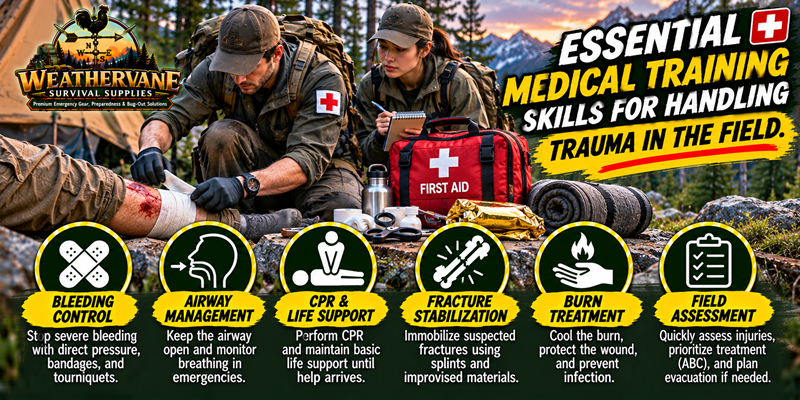
Essential Medical Training Skills for Handling Trauma in the Field – Possessing advanced emergency medical kits offers little value during critical situations if users lack the practical knowledge required to operate that gear under intense pressure. When severe physical accidents or environmental disasters happen miles away from clinical emergency rooms, proper treatment must begin immediately. Uncontrolled bleeding and compromised breathing can lead to tragic outcomes within moments if initial responders fail to stabilize the casualty.
Essential Medical Training Skills for Handling Trauma in the Field
Developing fundamental medical training skills for handling field trauma turns specialized gear into effective life-saving interventions. Understanding structured patient assessment systems, hemorrhage management techniques, respiratory stabilization, and shock prevention empowers individuals to deliver vital aid when medical professionals cannot reach the scene.
The Operational Framework: Understanding the MARCH Sequence
Field trauma protocols rely on prioritized treatment sequences to address critical physical threats systematically. Tactical medical teams utilize the MARCH framework to identify and manage life-threatening injuries based on urgency:
-
M – Massive Bleeding: Locate and control severe arterial hemorrhage before executing any other diagnostic steps.
-
A – Airway Management: Verify that the patient’s breathing passage remains completely clear and unobstructed.
-
R – Respiration Control: Inspect the chest area for penetrating wounds, structural collapses, or labored breathing mechanics.
-
C – Circulation Assessment: Check peripheral pulse strength, evaluate skin temperature, and treat signs of systemic shock.
-
H – Hypothermia Prevention: Insulate the patient to retain core heat, as low body temperature prevents normal blood clotting.
Critical Interventions for Severe Hemorrhage
Uncontrolled arterial blood loss represents the leading cause of preventable mortality following physical trauma. Mastering hemorrhage mitigation techniques remains the single most important skill for field medical responders. Comprehensive First Aid Kit Checklist for Extreme Survival Scenarios
1. Correct Windlass Tourniquet Application
When severe bleeding occurs on an arm or leg, applying a commercial windlass tourniquet (such as a CAT or SoftT-Wide model) halts blood flow rapidly.
-
Initial Positioning: Secure the tourniquet high on the injured limb over clothing if active danger prevents immediate exposure of the exact wound site.
-
Tightening Mechanism: Pull the main strap tight, rotate the windlass rod until active bleeding stops completely, and lock the rod securely inside the retention clip.
-
Time Documentation: Write the precise time of application directly onto the tourniquet strap to inform downstream surgical teams.
2. Deep Wound Packing with Hemostatic Agents
For junctional injuries where tourniquets cannot be applied—such as the groin, armpits, or neck—deep wound packing is required.
-
Direct Cavity Packing: Unroll hemostatic gauze and press it firmly into the wound cavity directly against the ruptured blood vessel.
-
Continuous Manual Compression: Apply strong two-handed physical pressure over the packed area for several minutes to allow active clotting agents to react with tissue fluids.
Airway Stabilization and Chest Trauma Care
Once severe bleeding is controlled, restoring stable oxygen intake becomes the next priority for casualty survival.
-
Nasopharyngeal Airway (NPA) Deployment: If an unconscious victim develops a blocked upper airway, inserting a lubricated flexible NPA tube through the nasal cavity secures an open breathing passage without triggering gag reflexes.
-
Vented Occlusive Chest Seals: Puncture wounds to the torso can draw air into the chest cavity, compressing the lungs. Applying a vented chest seal covers the open entry point while allowing trapped internal air and fluids to escape safely.
Preventing Trauma-Induced Hypothermia
Hypothermia presents a dangerous threat during field medical care, even in moderate weather conditions. Significant blood loss disrupts the central nervous system’s ability to maintain body heat. As internal body temperature drops, blood loses its capacity to form clots, worsening internal bleeding risks.
-
Ground Isolation: Place insulating sleeping pads, waterproof tarps, or thick coats beneath the casualty to prevent cold ground surfaces from drawing away body heat.
-
Remove Damp Garments: Strip off wet clothing quickly and wrap the patient inside thermal space blankets, heavy wool covers, or sleeping bags.
-
Protect the Head: Cover the casualty’s head with an insulated beanie to prevent rapid thermal loss from the scalp.
Building Practical Capability Through Continuous Practice
Studying emergency medicine manuals establishes a theoretical foundation, but true field competence demands repeated physical practice under simulated pressure:
-
Hands-On Muscle Memory Drills: Practice deploying tourniquets on your own limbs using your non-dominant hand in dark environments to build instinctual mechanical skills.
-
Complete Certified Training Programs: Participate in recognized practical medical courses, such as Stop the Bleed, Wilderness First Responder (WFR), or Tactical Combat Casualty Care (TCCC). Certified instructors provide live feedback that refines your physical execution.
Final Thoughts
Acquiring essential medical training skills for handling trauma in the field converts basic first aid supplies into an effective emergency defense system. By mastering the MARCH protocol, perfecting rapid tourniquet placement, securing compromised airways, and mitigating hypothermia risks, you build the physical capability needed to handle severe injuries. Invest time in certified trauma training today to protect your family and companions during unexpected emergency events.