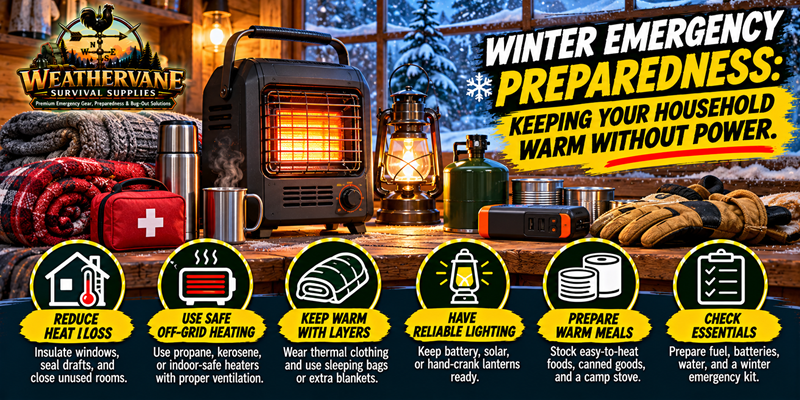
Winter Emergency Preparedness: Keeping Your Household Warm Without Power – Severe winter storms, heavy ice accumulation, and grid collapse can leave households without electrical power for extended periods. When sub-freezing temperatures arrive alongside utility failures, indoor residential environments lose heat rapidly. Prolonged cold exposure poses severe health risks, including hypothermia, frostbite, and carbon monoxide poisoning from improper heating methods.
Winter Emergency Preparedness: Keeping Your Household Warm Without Power
Preparing your household to generate and retain heat without grid electricity is a fundamental pillar of emergency readiness. Understanding passive insulation techniques, alternative heating options, bodily thermal management, and strict ventilation safety protocols enables families to stay warm and safe during winter power outages.
Creating an Insulated Micro-Climate Inside the Home
Attempting to heat an entire single-family home during a severe blackout wastes critical fuel and thermal resources. Instead, consolidate your family’s daily activities into a single small room to create a designated “micro-climate.”
-
Select an Interior Room: Choose a central room on the ground floor with minimal exterior walls and few windows. Basements can stay warmer than upper levels, but ground-floor living rooms are often easier to seal.
-
Isolate the Micro-Climate: Close all doors to unused bedrooms, bathrooms, and hallways to prevent heat dispersion. Hang heavy wool blankets, sleeping bags, or thermal curtains over doorways and open arches.
-
Seal Windows and Drafts: Block air leaks around window frames and door sweeps using rolled towels, weather-stripping foam, or heavy plastic sheeting. Sealing draft points prevents cold outside air from displacing indoor warmth.
Safe Off-Grid Emergency Heating Equipment
Selecting alternative heating gear requires balancing thermal output with strict indoor air safety standards. Never use unvented gas grills, charcoal burners, or outdoor camp stoves inside your home.
1. Indoor-Safe Propane Radiant Heaters
Portable indoor-rated propane heaters (such as Mr. Heater Buddy units) provide reliable emergency heat without electricity.
-
Safety Features: Look for units equipped with automatic Low Oxygen Shut-Off Systems (ODS) and tip-over safety switches.
-
Operational Guidelines: Always crack a window slightly (roughly one-half inch) to maintain fresh oxygen flow while running portable propane appliances indoors.
2. Kerosene Convection Heaters
Heavy-duty kerosene heaters deliver high BTU outputs suitable for warming larger enclosed rooms. Emergency Communication Systems: HAM Radio vs. Satellite Messengers
-
Fuel Requirements: Only use clean 1-K grade kerosene to minimize unpleasant odors and toxic soot accumulation.
-
Ignition Protocols: Always ignite and turn off kerosene heaters outdoors to prevent heavy fumes from entering living quarters.
3. Wood-Burning Stoves and Fireplaces
If your home features a functional wood stove or masonry fireplace, it serves as the ultimate self-sustaining heat source.
-
Chimney Inspection: Ensure your chimney flue is clean and clear of creosote buildup before winter arrives to avoid dangerous chimney fires.
-
Fuel Stockpiling: Store a generous supply of dry, seasoned hardwood indoors to maintain steady fires during multi-day grid outages.
Managing Body Heat and Layering Techniques
Retaining natural body heat is often more efficient than attempting to raise ambient room temperatures. Proper clothing layers lock in body heat effectively.
-
Base Layer (Moisture Management): Wear snug synthetic or Merino wool thermal underwear. Avoid cotton fabrics, as cotton absorbs body sweat and holds moisture against the skin, chilling you rapidly.
-
Insulating Layer (Trapping Heat): Wear thick fleece jackets, wool sweaters, or down vests. Trapping dead air space between fabric layers creates natural insulation.
-
Outer Barrier Layer: Wear wind-resistant shell jackets indoors if room drafts persist. Wear insulated wool socks, thermal beanies, and winter boots inside to protect extremities.
Crucial Safety Protocols and Carbon Monoxide Prevention
Using alternative combustion heaters indoors introduces serious hazards if safety guidelines are ignored:
-
Install Battery-Powered Carbon Monoxide (CO) Detectors: Carbon monoxide is an invisible, odorless gas produced by burning fuels. Position battery-operated CO detectors directly inside your micro-climate room.
-
Prevent Frozen Water Pipes: Open cabinet doors under sinks to allow room heat to reach plumbing lines. Leave faucets dripping slightly to keep water moving through pipes, preventing costly structural bursts.
-
Maintain Fire Safety Gear: Keep an ABC-rated fire extinguisher immediately accessible inside the designated warm room at all times.
Final Thoughts
Winter emergency preparedness requires proactive planning to keep your family warm when utility grids fail. By consolidating your household into a well-insulated micro-climate room, utilizing indoor-safe propane or wood heat, layering technical clothing properly, and enforcing strict carbon monoxide safety protocols, you guarantee physical safety during severe winter blackouts. Prepare your cold-weather emergency gear today to ensure your home remains a warm, secure refuge through any winter crisis.