Emergency Communication Systems: HAM Radio vs. Satellite Messengers – When catastrophic natural disasters or grid failures strike, traditional cellular networks and internet services usually fail first. Damaged cell towers, power blackouts, and network congestion leave millions without standard communication capabilities. In high-stress crisis scenarios, sending SOS distress signals or coordinating evacuation routes with family members requires specialized, off-grid communication hardware.
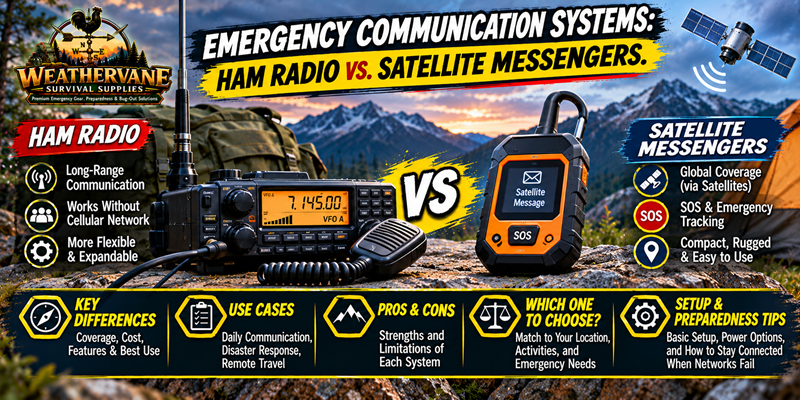
Emergency Communication Systems: HAM Radio vs. Satellite Messengers
Selecting effective emergency communication systems involves evaluating two primary technologies: Amateur (HAM) Radio networks and Satellite Messengers. Understanding the structural mechanics, operational range, licensing requirements, and functional limitations of each option allows preppers and outdoor enthusiasts to choose the right gear for emergency preparedness.
Understanding the Importance of Off-Grid Connectivity
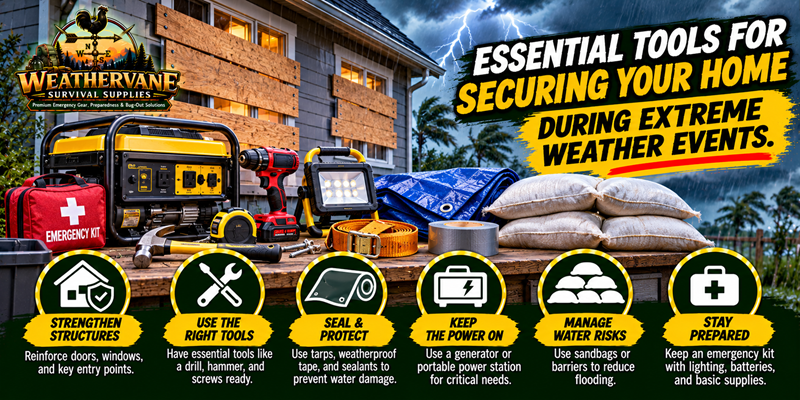
Standard smartphones rely heavily on terrestrial towers and continuous electrical grid power. Once severe weather damages physical cell sites or floodwaters submerge power sub-stations, mobile phones become completely ineffective. Essential Tools for Securing Your Home During Extreme Weather Events
Establishing independent off-grid communication ensures continuous contact with emergency response teams, local tactical networks, and family members. A balanced preparedness strategy relies on hardware that bypasses local infrastructure failures entirely.
Overview of Amateur (HAM) Radio Systems
Amateur radio, commonly known as HAM radio, relies on electromagnetic radio frequency spectrums to transmit voice messages and digital data directly between radio transceivers.
1. Technical Capabilities and Range
HAM radios operate across multiple frequency bands, primarily Very High Frequency (VHF), Ultra High Frequency (UHF), and High Frequency (HF).
-
VHF/UHF Handhelds: Portable handheld transceivers (HTs) communicate across local line-of-sight distances, typically reaching 2 to 10 miles depending on terrain, foliage, and structural obstacles.
-
HF Transceivers: Base station HF radios bounce radio signals off the ionosphere, allowing operators to communicate across thousands of miles without using satellite relays or internet servers.
2. Key Advantages
HAM radio operates completely free of subscription fees, third-party infrastructure, or corporate server networks. Operators maintain total control over their gear, frequencies, and power sources.
3. Operational Constraints
Operating a HAM radio requires formal licensing from regulatory bodies (such as the FCC). Users must pass technical exams to understand frequency allocations and signal protocols. Furthermore, operating complex HF equipment demands a steep learning curve and proper antenna setup.
Overview of Satellite Messengers
Satellite messengers are compact electronic devices that connect directly to commercial satellite constellations orbiting high above the Earth’s atmosphere.
1. Technical Capabilities and Features
Devices such as Garmin inReach or ZOLEO transmit low-bandwidth GPS data, text messages, and emergency SOS alerts directly to global satellite networks.
-
Interactive Two-Way Messaging: Modern satellite units allow users to send and receive text messages to cell phone numbers or email addresses anywhere on Earth.
-
Dedicated SOS Dispatch: Pressing a physical SOS button transmits exact GPS location coordinates to international emergency response coordination centers for immediate search-and-rescue dispatch.
2. Key Advantages
Satellite messengers require zero technical radio knowledge to operate. Their simple smartphone-like interfaces enable anyone to send location updates or call for emergency help instantly, even deep inside remote wilderness areas.
3. Operational Constraints
Satellite devices require clear, unobstructed views of the open sky to connect with orbital satellites; dense forest canopies, deep canyons, or indoor structures can block signal transmission. Additionally, these units require ongoing monthly or annual subscription plans to keep communication services active.
Direct Operational Comparison for Emergency Readiness
Evaluating HAM radios against satellite messengers side-by-side clarifies which device fits your disaster strategy:
-
Ease of Use: Satellite messengers win for immediate simplicity. They require no technical training, making them accessible for children and non-technical family members.
-
Infrastructure Independence: HAM radio wins clearly in long-term collapse scenarios. It operates without reliance on private satellite corporations, server centers, or recurring monthly payments.
-
Emergency Rescue Access: Satellite messengers offer direct links to professional search-and-rescue teams via dedicated SOS monitoring centers, whereas HAM radios depend on finding active local operators monitoring specific frequencies.
Final Thoughts
Selecting between HAM radios and satellite messengers depends on your specific emergency readiness goals. If you want a user-friendly, push-button SOS device for backcountry hiking, family evacuations, and global location tracking, a satellite messenger is the optimal choice. If your goal is long-term resilience, decentralized network control, and cost-free communication during total infrastructure failures, HAM radio provides unmatched capability. Equipping your survival kit with both technologies ensures absolute connectivity under any emergency scenario.