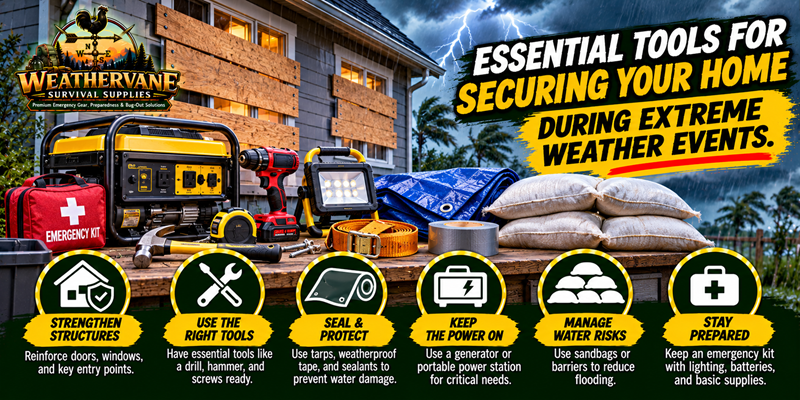
Essential Tools for Securing Your Home During Extreme Weather Events – Severe weather events—ranging from destructive hurricanes and intense tornadic winds to rapid flash floods and winter ice storms—pose continuous threats to residential structures. When extreme weather strikes, structural damage can occur within seconds, exposing homes to water intrusion, high-velocity debris, and structural failure. Protecting your property requires proactive preparation using specialized tools and equipment designed to reinforce structural weak points.
Essential Tools for Securing Your Home During Extreme Weather Events
Equipping your home with essential security and reinforcement tools provides a critical defensive buffer against harsh environmental forces. Understanding how to secure windows, reinforce doors, mitigate water entry, and perform emergency structural repairs enables homeowners to safeguard their families and minimize long-term property damage.
Understanding Residential Vulnerabilities in Severe Storms
Structural damage during severe weather usually begins at vulnerable entry points. Windows, garage doors, exterior entry doors, and roof structures face the highest physical stress from extreme wind pressure and flying debris.
Once wind or water breaches a building’s outer envelope, internal pressure increases rapidly, drastically lifting roof structures and collapsing interior walls. Implementing structural fortification tools before a storm arrives maintains building integrity and protects interior living spaces.
Essential Hardware and Tools for Home Reinforcement
Securing a home requires heavy-duty manual tools, mechanical fasteners, and emergency barrier materials capable of withstanding physical impact.
1. Heavy-Duty Cordless Impact Drivers and Fasteners
A high-torque cordless impact driver is indispensable for rapid window boarding and structural bracing.
-
Key Components: Pair impact drivers with heavy-duty masonry anchors, exterior wood screws, and structural lag bolts.
-
Application: Impact drivers allow homeowners to install thick plywood shutter panels over window frames rapidly before high winds arrive.
2. Structural Plywood and Hurricane Clips
Covering glass windows prevents pressure breaches caused by airborne storm debris.
-
Materials: Store pre-cut 5/8-inch exterior-grade plywood panels labeled for specific window dimensions.
-
Reinforcement: Install steel hurricane clips or barrel bolts to anchor window boards directly into concrete masonry or structural wall studs rather than weak window trims.
3. Flood Barriers and Expandable Sandbags
Continuous torrential rain and storm surges can cause water to rise rapidly around home foundations. Selecting Emergency Lighting Tools and Off-Grid Power Solutions
-
Modern Sandbags: Self-activating water-absorbent barrier bags expand automatically when exposed to freshwater, creating dense dams without requiring heavy dirt shoveling.
-
Threshold Seals: Heavy-duty rubber garage door threshold seals prevent rising water from seeping under ground-level entry points.
4. Emergency Tarping Equipment and Roof Fasteners
Roof shingles and tiles frequently blow off during high-wind events, exposing internal ceiling trusses to heavy rain.
-
Equipment: Heavy-duty, UV-resistant poly tarps combined with wood furring strips and roofing nails are essential emergency response tools.
-
Mechanism: Securing tarps over damaged roof sections using screwed-down wooden strips prevents wind from tearing protective sheeting away during ongoing storms.
Manual Demolition and Clearing Tools for Post-Storm Safety
Securing a property involves both pre-storm fortification and immediate post-storm hazard mitigation. Keep these manual tools accessible inside an interior safety room:
-
Heavy-Duty Pry Bars and Wrecking Bars: Essential for levering jammed doors open if wall frames shift during severe wind impacts or structural settling.
-
Tactical Axes and Bow Saws: Necessary for clearing fallen tree limbs blocking emergency exit pathways, driveways, or damaged roof structures.
-
Heavy-Duty Utility Knives and Duct Tape: Used for cutting protective sheeting, sealing minor air leaks, and patching temporary structural barriers.
Vital Inspection and Storage Protocols
To ensure your home security tools perform reliably when severe weather warnings are issued, establish disciplined storage and maintenance routines:
-
Centralized Tool Organization: Store storm preparation tools inside a dedicated, water-tight storage tote located in an easily accessible area like a garage or basement.
-
Maintain Battery Readiness: Keep cordless power tool batteries fully charged and store a high-capacity portable power bank to recharge tools during post-storm power outages.
-
Perform Pre-Season Audits: Inspect pre-cut plywood boards, hurricane clips, and tarping materials annually before local storm or hurricane seasons begin. Replace warped lumber or degraded plastic tarps immediately.
Final Thoughts
Investing in essential tools for securing your home during extreme weather events is a core pillar of comprehensive family readiness. By stocking high-torque impact drivers, pre-cut structural plywood, flood barriers, emergency roof tarps, and heavy-duty manual clearing gear, you create a robust physical defense for your property. Acquire and organize your home fortification tools today to ensure your household remains safe, secure, and resilient against any storm.